 Lifecycle Management in ESD Personnel Testing
26.2.2026
Lifecycle Management in ESD Personnel Testing
26.2.2026
An ESD personnel tester is installed, commissioned, and integrated into daily operations. It performs reliable measurements. It displays “Pass.” The process works.
But the crucial question is: Will the system still meet technical, regulatory, and organizational requirements in five or ten years?
In many organizations, the focus ends with basic functionality. Yet this is exactly where the real challenge begins: lifecycle management.
Particularly in ESD personnel testing, the system architecture determines whether a device remains capable and future-proof over the long term—or gradually becomes technologically outdated.
ESD control requirements are defined, among others, by IEC 61340-5-1. This standard specifies limit values, test methods, and organizational requirements for ESD Protected Areas (EPAs).
However, compliance is not a static condition. It evolves continuously, just like:
A modern ESD personnel tester must therefore do more than simply perform measurements. It must be capable of evolving with changing requirements.
Within an ESD personnel tester, the firmware controls:
While the underlying measurement principles remain unchanged, data processing and system functionality can be continuously improved.
A device without update capability remains technically static—even if the hardware itself continues to function perfectly.
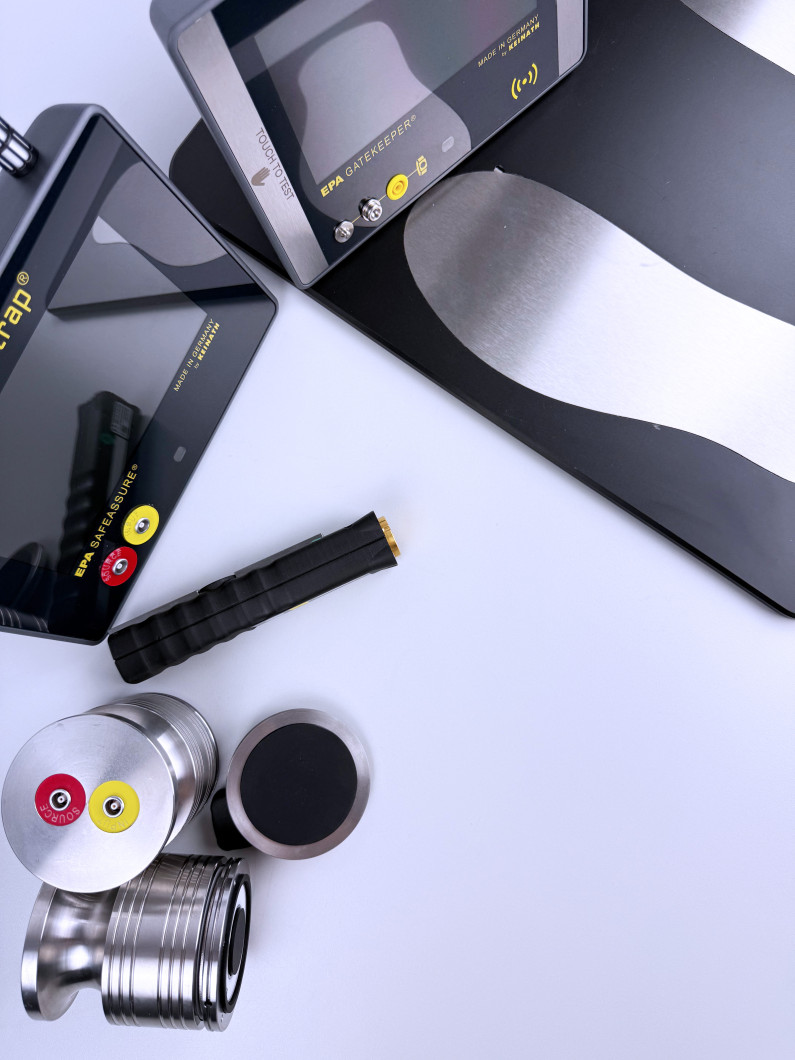
The EPA Gatekeeper® has been designed to support firmware updates, enabling:
This not only extends the system's service life but also protects the customer's investment.
Organizations grow. Processes evolve.
What begins today as a standalone device may later require:
Rigid systems often require complete hardware replacement when requirements change.
A modular system, by contrast, enables:
The EPA Gatekeeper® has been intentionally designed as a modular platform. It grows with the organization rather than limiting future development.
Many systems on the market require:
This often results in:
The EPA Gatekeeper® was deliberately developed without the need for additional server or client software.
Its integrated system architecture reduces IT complexity, implementation effort, maintenance requirements, and potential system disruptions.
Particularly in highly regulated industries and international organizations, this independence represents a significant advantage.
Every measurement system is subject to component aging, thermal stress, electrical drift, and mechanical wear.
Regular calibration is therefore not merely a formality—it is essential for maintaining reproducible and audit-ready measurement results.
Modern systems such as the EPA Gatekeeper® support:
This ensures that measurement accuracy remains verifiable rather than assumed.
An ESD personnel tester is:
Lifecycle management therefore means looking beyond current functionality and considering the system's role within future process generations.
Organizations investing in ESD personnel testing technology today should ask:
Entdecken Sie neue Trends und spannende Entwicklungen in unserem Newsletter! Erhalten Sie Expertenwissen regelmäßig in Ihrem Postfach.
Anyone conducting an ESD audit or seeking to verify the effectiveness of an ESD control program will quickly face a crucial question: What kind of measuring[...]
Read moreIn modern electronics manufacturing, the annual inspection of all ESD protection devices in accordance with DIN EN 61340-5-1 is a critical component of quality management; in[...]
Read more
Consistent Soldering Processes Through Precise Analysis
Quality in the soldering process begins in the solder bath.
A stable and defect-free soldering process is crucial to the reliability of[...]
Why the sparktrap® EPA SafeAssure® Is Replacing Traditional Resistance Meters
Industrial laundry service providers bear a great deal of responsibility: Leading industrial companies rely on their ESD[...]
The True Cost of Manual Inspection Routines in Electronics Manufacturing
In modern manufacturing environments characterized by a wide variety of product variants and small batch sizes, as[...]