 What kind of measuring device do I need for an ESD audit?
3.9.2026
What kind of measuring device do I need for an ESD audit?
3.9.2026
Anyone conducting an ESD audit or seeking to verify the effectiveness of an ESD control program will quickly face a crucial question: What kind of measuring devices do I actually need to properly test my ESD protection zone?
There is no one-size-fits-all answer to this question. This is because an ESD audit does not focus on a single measurement. Depending on the design of the ESD protection area, the ESD control measures in place, and the established testing procedures, a wide variety of measurements may be required.
Resistances must be measured, electrostatic fields detected, personal grounding systems checked, and, if necessary, ionizers evaluated. In addition, the correct electrodes must be selected, the measurement results evaluated, and comprehensive documentation provided.
Traditionally, this means: multiple measuring devices, various accessories, and different measurement methods. But what specific measurement technology is actually needed?
Typical assessment tasks in an ESD audit may include, among other things:
Resistance measurements on work surfaces, floors, shelves, or conveyors
Testing of Personal Grounding Systems
Evaluation of the Footwear-Surface System
Walking Test
Measurement of Electrostatic Fields
Testing of ESD Clothing
Inspection of Ionization Systems
Traditionally, these different tasks require different measuring instruments, electrodes, and accessories.
Depending on the configuration of the EPA, the following devices and components, among others, may be required:
High-Impedance Resistance Tester
for resistance measurements on ESD control elements
Measuring Electrodes
for different test setups
Electric field meter or field mill
for measuring electrostatic fields
Walking Test Measurement Technology
for measuring muscle tension
Measurement Technology for Personal Grounding and Clothing
Charge Plate Monitor
for the inspection of ionization systems
Which components are actually required always depends on the specific EPA and the established ESD control program.
This is exactly where modern ESD measurement technology comes into play. Instead of using completely separate devices for each test task, different measurement functions can now be combined into a single system.
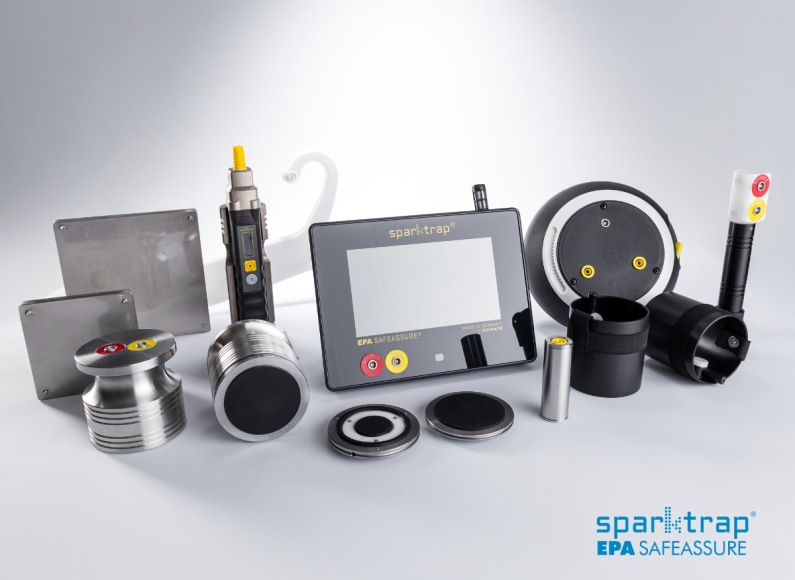
With the sparktrap® EPA SafeAssure® At KEINATH Electronic, we have taken exactly this approach. The ESD multimeter combines various areas of ESD measurement technology into a single system and also assists with the evaluation, classification, and documentation of the measured values. This transforms many individual measurement steps into a seamless testing process.
Entdecken Sie neue Trends und spannende Entwicklungen in unserem Newsletter! Erhalten Sie Expertenwissen regelmäßig in Ihrem Postfach.
Three days at EFX 2026 in Stuttgart are now behind us. For KEINATH Electronic, the focus was not only on presenting innovative ESD measurement technology, but[...]
Read more
A New Approach to ESD Measurement Technology: From Precise Individual Measurements to Structured and Traceable Testing
ESD protection is an integral part of quality assurance in many[...]
In modern electronics manufacturing, the annual inspection of all ESD protection devices in accordance with DIN EN 61340-5-1 is a critical component of quality management; in[...]
Read more
Consistent Soldering Processes Through Precise Analysis
Quality in the soldering process begins in the solder bath.
A stable and defect-free soldering process is crucial to the reliability of[...]
Why the sparktrap® EPA SafeAssure® Is Replacing Traditional Resistance Meters
Industrial laundry service providers bear a great deal of responsibility: Leading industrial companies rely on their ESD[...]